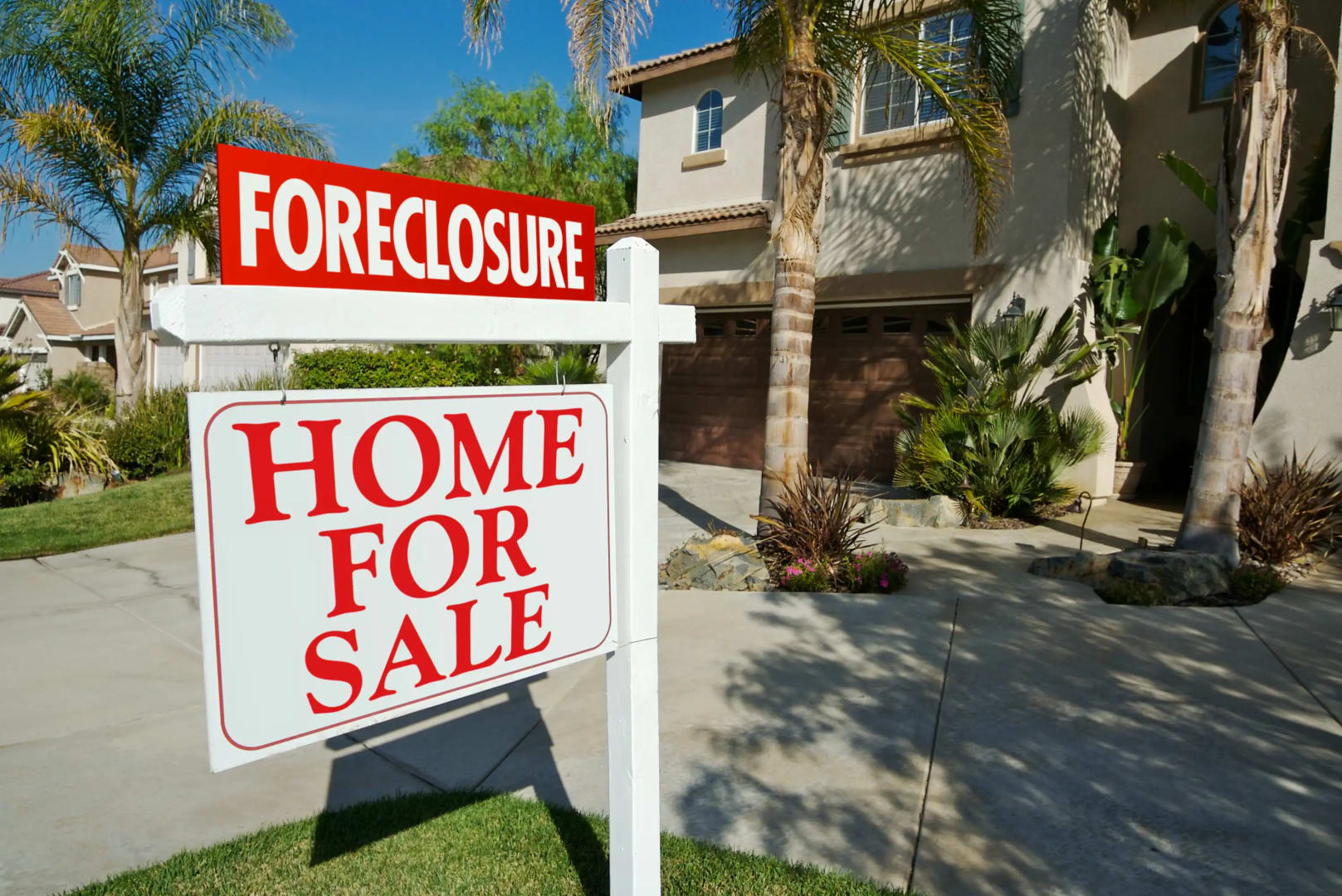
When you're behind on your mortgage, receiving foreclosure notices, facing mounting late payments, or simply don't know how you're going to keep your home, it can feel like you've run out of options.
You may not have.
Before assuming that bankruptcy, a short sale, or foreclosure is your only path forward, it can be worth determining what your home is actually worth, how much equity may exist, what is owed to the mortgage company, what repairs or improvements could increase the property's marketability, and whether selling the property could provide a workable financial exit.
That's where Brandon S. Broussard, Massachusetts-licensed Real Estate Broker and Principal Broker of Prime Capital Realty Inc., brings a different perspective.
Brandon is also a Short Sales and Foreclosures Resource (SFR) professional, giving homeowners an experienced real estate resource when navigating distressed-property situations.
And through his Seller's Home Improvement Program, qualifying homeowners may have an opportunity to address certain repairs and improvements before the property is sold, with eligible improvement costs potentially being repaid from the proceeds at closing, subject to the program's terms, written agreement, property economics, and applicable requirements.
Improve the property.
Maximize its marketability.
Sell strategically.
Use the closing proceeds to address eligible mortgage obligations and other approved costs.
And, when the numbers and underwriting allow, potentially preserve equity that can help fund the next chapter.
Sometimes the better question is:
For some homeowners, keeping the property through a loan modification or another workout may be appropriate.
For others, selling the property before foreclosure may provide a more practical solution.
And for some homeowners, the property may have enough value to potentially satisfy the mortgage, cure delinquent payments, pay selling expenses, address approved property improvements, and still leave equity for the homeowner.
You won't know until you analyze the numbers.
That's where Brandon's real estate, mortgage-planning, construction, and property perspectives can become particularly valuable.
One of the biggest challenges facing a distressed homeowner is the condition of the property.
You may know the house needs:
Painting
Flooring
Roofing work
Kitchen improvements
Bathroom improvements
Carpentry
Landscaping
Exterior repairs
Deferred maintenance
General repairs
Cosmetic improvements
Safety-related improvements
Other construction work
But if you're already behind on your mortgage, where are you supposed to find the money to make those improvements?
Through the program, qualifying homeowners may be able to have certain approved repairs or improvements completed before the property is sold, with the applicable costs potentially being repaid at closing from the transaction proceeds.
Instead of saying:
“I can't afford to fix the house, so I can't sell it.”
The strategy can become:
“Let's determine what the property needs, what improvements make economic sense, how the project can be structured, and whether the anticipated sale proceeds can support the transaction.”
Brandon begins by understanding where you are financially and where you are in the property-sale or foreclosure process.
Important questions can include:
How much do you owe on the mortgage?
Are you behind on payments?
How much are the arrears?
Have you received foreclosure notices?
Is a foreclosure sale scheduled?
Are there additional liens?
Are property taxes current?
What is the approximate market value?
What condition is the property in?
What repairs are necessary?
What improvements could improve marketability?
How quickly does the property need to be sold?
The value of your property matters.
A property that appears financially impossible to sell may look very different after evaluating:
Estimated market value
minus
Mortgage payoff
minus
Delinquent payments / eligible arrears
minus
Property taxes or other liens
minus
Selling expenses
minus
Approved improvement costs
equals
This is only an illustration—not a guarantee of value or proceeds.
The actual numbers must be determined for the individual property and transaction.
Not every repair is worth doing.
The goal isn't to spend $50,000 because the house needs $50,000 worth of work.
The goal is to determine:
For example:
A homeowner may have a property worth approximately $500,000 in its current condition.
Perhaps the home needs $20,000 of improvements.
After appropriate improvements, the property may potentially be positioned to compete more effectively in the market.
The additional market value, marketability, buyer appeal, and saleability must be evaluated against the cost of the improvements.
There is no guarantee that improvements will increase the property's value by the amount spent or result in a particular sale price.
But strategically selecting improvements can be very different from simply selling a distressed property as-is.
Subject to program eligibility, written agreements, property economics, and applicable requirements, approved improvements can be completed before the sale.
This can potentially include:
Interior painting
Exterior painting
Flooring
Kitchen improvements
Bathroom improvements
Roofing
Carpentry
Exterior repairs
Landscaping
Electrical-related improvements
Plumbing-related improvements
HVAC-related improvements
Deferred maintenance
Cosmetic improvements
Other qualifying construction work
The purpose isn't to create the most expensive house possible.
Once the property is improved, Brandon can help prepare the property for sale.
That may include:
Property positioning
Pricing strategy
Comparative market analysis
Listing preparation
Photography
Marketing
Buyer targeting
Showing strategy
Offer analysis
Negotiation
Contract-to-close management
The objective is to maximize the opportunity for a successful sale while working within the homeowner's financial circumstances.
Once an acceptable offer is obtained, the transaction moves toward closing.
The sale proceeds may then be used, according to the transaction's terms and applicable payoff requirements, to satisfy obligations such as:
Mortgage payoff
Eligible delinquent mortgage amounts
Approved property-improvement costs
Property taxes
Other liens
Closing expenses
Other transaction-related obligations
This is where the strategy can become particularly important.
Suppose a homeowner has:
Estimated sale price: $550,000
Mortgage payoff: $400,000
Mortgage arrears: $25,000
Approved improvement costs: $15,000
Selling and closing expenses: $35,000
Illustrative calculation:
$550,000
− $400,000 mortgage
− $25,000 arrears
− $15,000 improvements
− $35,000 selling/closing expenses
= $75,000 potential remaining equity
This is only a hypothetical example.
Actual proceeds depend on the property's sale price, mortgage payoff, arrears, liens, taxes, commissions, closing costs, improvement costs, payoff requirements, and other transaction-specific factors.
A homeowner facing foreclosure shouldn't automatically assume:
“I'm losing my house, so I'm losing everything.”
The property may contain equity.
The question is whether that equity can be strategically preserved through a properly structured sale.
A Massachusetts short sale occurs when the sale proceeds are insufficient to pay the existing liens and transaction expenses, requiring lender approval for the short payoff.
If the property can instead be sold for enough to satisfy the required mortgage payoff, arrears, liens, selling expenses, and other transaction obligations, a short sale may not be necessary.
Instead of automatically listing a distressed property as a short sale, Brandon can help evaluate whether the property has sufficient market value and whether improvements could potentially strengthen the sale.
The answer will depend entirely on the numbers.
Bankruptcy is a legal process.
Brandon is a real estate broker—not your bankruptcy attorney.
However, if a homeowner can sell a property for sufficient proceeds to address the mortgage delinquency and other eligible obligations, that sale may potentially become one component of a broader strategy for dealing with financial distress.
Massachusetts advises homeowners considering bankruptcy or other foreclosure options to obtain qualified legal and financial guidance.
Don't assume bankruptcy is your only option before you understand the real estate side of the equation.
Talk to the appropriate professionals.
Understand your mortgage.
Understand your legal options.
Understand your home's value.
Then make an informed decision.
For a homeowner facing foreclosure, equity can become a critical financial resource.
If your property is worth substantially more than what you owe, selling the property may potentially allow you to:
Pay off the mortgage
Cure eligible delinquent amounts
Pay required liens and expenses
Pay approved improvement costs
Complete the transaction
Preserve remaining equity
And potentially use some of that equity toward your next chapter.
This is where Brandon's multi-perspective approach becomes particularly powerful.
Brandon isn't only a real estate broker.
He also works as a Mortgage Loan Originator with Nextgen Mortgage Inc., NMLS #1914798, providing mortgage services subject to applicable licensing, lender, program, underwriting, and regulatory requirements.
That means a homeowner who successfully sells a distressed property may have an opportunity to explore what comes next.
Depending on the individual's:
Credit
Income
Employment
Assets
Debt
Mortgage history
Tax situation
Sale proceeds
Remaining equity
Waiting-period requirements
Loan program
Underwriting profile
the homeowner may potentially qualify to purchase another property.
For example, if a homeowner sells a property and has $75,000 in net proceeds, those funds could potentially be considered for a future purchase as a source of down payment and/or allowable closing costs, subject to lender requirements and documentation.
The point isn't to promise that you'll automatically qualify.
Imagine a homeowner who is:
Behind on the mortgage
↓
Property needs repairs
↓
Homeowner believes there is no way out
↓
Property value and mortgage balance are analyzed
↓
Potential equity is identified
↓
Strategic improvements are considered
↓
Property is repaired and prepared for sale
↓
Home is marketed
↓
Property sells
↓
Mortgage and eligible obligations are addressed
↓
Remaining equity may be preserved
↓
Mortgage and financial situation are reviewed
↓
Homeowner explores future purchase eligibility
↓
That is the type of long-term thinking Brandon brings to the relationship.
Brandon doesn't believe his relationship with a buyer should end at the closing table.
Through Prime Capital Realty Inc., qualifying homebuyers may be eligible for the Homebuyers Maintenance Program, which can provide eligible minor maintenance assistance for as long as the buyer owns the home, subject to program terms, eligibility, availability, and applicable agreements.
Because homeownership doesn't end when you receive the keys.
That's when it begins.
Homeownership brings maintenance.
Things break.
Fixtures wear out.
Minor repairs become necessary.
Small problems can become larger problems when ignored.
A maintenance-focused homeowner program can provide an additional resource for eligible minor maintenance needs, subject to the program's terms.
When eligible buyers purchase a home through Prime Capital Realty Inc. and obtain mortgage financing through Brandon S. Broussard with Nextgen Mortgage Inc., NMLS #1914798, the buyer may potentially qualify for a portion of Brandon's real estate compensation to be applied toward allowable closing costs, subject to applicable law, brokerage policies, buyer agreements, lender requirements, loan-program limits, and transaction-specific approval.
You may be able to have Brandon working with you on:
THE REAL ESTATE SIDE
and
THE MORTGAGE SIDE
while potentially receiving an additional financial benefit from the real estate transaction.
Massachusetts guidance recognizes that buyer-broker compensation can be structured in different ways and that the structure must be reflected appropriately in the transaction documents; financing rules can also limit how compensation or concessions are applied toward closing costs.
Imagine you're purchasing a $500,000 home.
Your transaction has allowable closing costs and prepaid expenses.
If you qualify for a permitted real estate compensation contribution, that benefit may potentially reduce the amount of your own funds needed for eligible closing expenses.
That could potentially allow you to:
Preserve more cash
Maintain an emergency reserve
Keep money available for moving expenses
Preserve funds for initial maintenance
Reduce cash needed at closing
Allocate available funds more strategically
A mortgage-planning approach can help you determine where that money may be most useful.
Brandon's value isn't simply that he can help you buy or sell a house.
It's that his professional perspective crosses multiple areas of the property transaction.
Massachusetts-licensed Real Estate Broker and Principal Broker of Prime Capital Realty Inc.
SFR professional with experience and resources focused on short sales, foreclosure situations, and distressed-property transactions.
Mortgage Loan Originator with Nextgen Mortgage Inc., NMLS #1914798, providing mortgage services subject to applicable requirements.
A construction perspective that can help homeowners understand how property condition and improvements may affect a sale.
The ability to look at the property, financing, construction needs, transaction structure, and future ownership strategy as connected pieces.
You get someone who can help you ask better questions.
Don't just ask:
“What can I sell my house for?”
Ask:
“What strategy could potentially maximize my net proceeds?”
Don't just ask:
“How do I stop foreclosure?”
Ask:
“What are all of my available options, and what does my home's equity look like?”
Don't just ask:
“Can I afford to fix my house?”
Ask:
“Which improvements make economic sense, and can the project be structured around the eventual sale?”
Don't just ask:
“What's my monthly payment?”
Ask:
“How should I structure the entire purchase?”
Don't just ask:
“What is my house worth?”
Ask:
“What can my equity potentially do for my next move?”
That is the bigger vision.
Brandon can help you evaluate where you are today and develop a real estate strategy for where you want to go next.
The Massachusetts Attorney General advises homeowners who are behind on mortgage payments not to ignore the problem and encourages homeowners to communicate with their mortgage servicer and seek qualified assistance. Massachusetts also provides foreclosure-prevention resources for homeowners facing financial difficulty.
The sooner you understand your options, the more opportunity you may have to make informed decisions.
START WITH THE NUMBERS.
If you're:
Behind on your mortgage
Facing foreclosure
Receiving collection or default notices
Worried about a foreclosure sale
Considering a short sale
Considering bankruptcy
Unsure of your home's value
Unable to afford needed repairs
Concerned about selling an as-is property
Unsure whether you have equity
Thinking about selling and buying another home
Looking for a strategic real estate plan
The first step isn't committing to sell.
The first step is understanding your situation.
REAL ESTATE. MORTGAGE. CONSTRUCTION. PROPERTY STRATEGY.
Contact Brandon S. Broussard and Prime Capital Realty Inc. today for a confidential consultation regarding your home sale, foreclosure situation, short-sale alternatives, property improvements, equity, or next-home strategy.
This webpage is for general informational and marketing purposes and is not legal, tax, bankruptcy, credit-repair, investment, or financial advice.
A homeowner facing foreclosure should consider consulting qualified legal counsel, a tax professional, HUD-approved housing counselor, mortgage/loan-modification professional, or other appropriate advisor regarding the homeowner's individual circumstances. Massachusetts specifically provides foreclosure-prevention resources and recommends qualified assistance for homeowners experiencing mortgage difficulties.
The Seller's Home Improvement Program is subject to eligibility, property evaluation, written agreements, approved project scope, available resources, transaction economics, applicable laws, regulations, and other requirements. There is no guarantee that a property will sell, that improvements will increase value, that a particular sale price will be achieved, that a homeowner will avoid foreclosure, that a homeowner will avoid bankruptcy, that a short sale will be avoided, or that sufficient proceeds will be available to satisfy all mortgage, lien, tax, improvement, or transaction obligations.
Whether a sale can cure mortgage arrears, satisfy a mortgage payoff, avoid a short sale, preserve equity, or provide funds for a future home purchase depends on the property's actual market value, mortgage payoff, arrears, liens, taxes, transaction costs, buyer demand, lender requirements, and other factors.
The Homebuyers Maintenance Program is subject to its own eligibility requirements, terms, limitations, availability, and written agreements. It does not guarantee that all maintenance or repair expenses will be covered.
Any real estate commission rebate, compensation contribution, closing-cost credit, or similar buyer incentive is subject to applicable Massachusetts law, brokerage policies, the buyer's written agreement, lender requirements, loan-program guidelines, underwriting approval, transaction documentation, and applicable limits. Such an incentive is not guaranteed and may not be available in every transaction. Massachusetts guidance notes that buyer-broker compensation and related concessions must be appropriately reflected in transaction documents and that financing rules may limit how amounts can be applied toward closing costs.
Mortgage financing is provided through Nextgen Mortgage Inc. and is subject to applicable licensing, lender guidelines, loan-program requirements, underwriting, credit approval, income and asset verification, property requirements, and other conditions. NMLS #1914798 identifies Brandon S. Broussard as a mortgage loan originator; it does not guarantee loan approval, terms, rates, or availability.
Prime Capital Realty Inc., Nextgen Mortgage Inc., and any construction, insurance, HVAC, or other professional entities with which Brandon S. Broussard may be affiliated are separate legal entities. Nothing on this page should be interpreted as stating that these businesses are one legal entity or that use of one service automatically qualifies a consumer for another service or incentive.
Greater New England Area
I'm a local real estate expert with experience in helping homeowners achieve their real estate goals. My strategic marketing plan and comprehensive market analysis, will help you sell your home quickly and for the best possible price.
Get Started, Contact Me ⬇
Sign in with your email address
Enter your email address
Please wait...
You’re being redirected to the page with listing data.